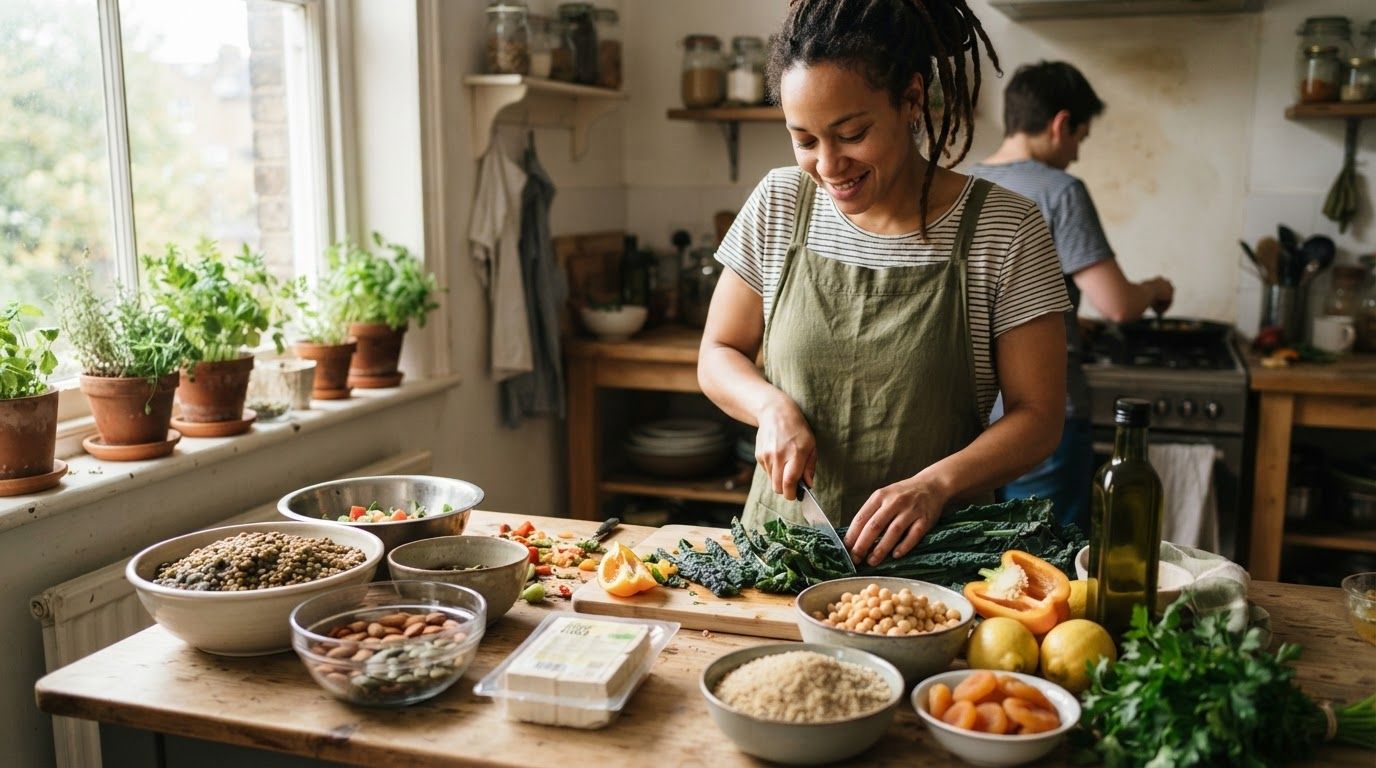
vegan iron sources
Vegan iron sources build optimal health without animal heme
Relying on vegan iron sources provides safer, regulated mineral intake—learn how smart kitchen pairings unlock peak non-heme absorption for lasting vitality.
Published October 7, 2026 · 7 min read
Image: AI-generated illustration · One Fork
Vegan iron sources supply all the mineral intake the human body requires while shielding against the chronic disease risks tied to animal heme. By pairing non-heme plants with ascorbic acid and eliminating absorption inhibitors, plant-based eaters achieve stable ferritin levels without compromising cardiovascular health.
Vegan iron sources provide all the mineral density required for human health while sidestepping the chronic oxidative and metabolic dangers inherent to animal heme. Decades of nutritional folklore have led the public to believe that plant eaters perpetually hover on the brink of anemia. However, clinical biochemistry demonstrates that a thoughtful plant-based diet supplies copious iron that the body absorbs in a safe, self-regulating manner.
Selecting high-quality vegan iron sources such as lentils, soybeans, pumpkin seeds, and dark leafy greens allows the human body to calibrate mineral uptake precisely to its metabolic needs. Unlike heme iron, which penetrates the gut mucosa uncontrolled, non-heme iron cooperates with the endocrine system, ensuring physiological sufficiency without tissue-damaging overload.
The claim
Plant-derived iron is biologically superior to animal-derived heme iron because the body can actively regulate non-heme absorption according to its physiological needs, preventing the chronic oxidative stress, inflammation, and metabolic disease caused by unregulated heme accumulation.
For generations, nutritional orthodoxy treated the higher baseline absorption rate of heme iron—found strictly in animal flesh—as an unambiguous biological advantage. Nutrition textbooks routinely praised red meat for delivering iron that slips past the intestinal mucosal barrier with minimal resistance. But this framing conflates short-term bioavailability with long-term human health. Iron is a double-edged sword: essential for cellular respiration and oxygen transport via hemoglobin, yet catastrophic when circulating in unbuffered surplus. The human body possesses no active physiological pathway for excreting excess iron; shedding occurs only through blood loss, skin desquamation, and mucosal sloughing. By relying on vegan iron sources, we allow our internal biology to govern uptake at the duodenal brush border, absorbing more when stores run low and rejecting excess when ferritin levels normalize.
The evidence
Peer-reviewed population cohorts and metabolic ward trials consistently reveal that plant-based populations consume more total iron than omnivores, while avoiding the metabolic pathologies linked to the unbuffered absorption of animal heme.
Large-scale epidemiological research systematically demolishes the myth of plant-based iron starvation. The landmark EPIC-Oxford study (Davey et al., 2003), which tracked 65,429 men and women in the United Kingdom, revealed that vegan participants had the highest average daily iron intake among all dietary groups, consistently surpassing meat-eaters and vegetarians. While omnivores obtained a fraction of their mineral pool from heme sources, vegans consumed far higher quantities of non-heme iron from legumes, unrefined whole grains, and leafy vegetables.
These findings were corroborated in North America by the Adventist Health Study-2 (Rizzo et al., 2013). Examining dietary patterns across more than 70,000 subjects, Loma Linda University researchers documented that strict vegetarians met or exceeded the daily Recommended Dietary Allowance (RDA) for iron without animal products. Although vegans frequently exhibit lower baseline serum ferritin concentrations compared to meat-eaters, lower ferritin within the normal physiological range (30 to 100 ng/mL) is an indicator of metabolic health, not clinical deficiency.
"Non-heme iron absorption is controlled by the body's iron status and by dietary factors that enhance or inhibit uptake. High iron stores downregulate non-heme absorption, creating an intrinsic defense mechanism against iron toxicity that heme iron bypasses." — Hurrell & Egli, *The American Journal of Clinical Nutrition* (2010)
Crucially, excess iron is a potent pro-oxidant. When unchelated iron accumulates in tissue, it catalyzes the Fenton reaction, generating toxic hydroxyl radicals that trigger lipid peroxidation, damage DNA, and accelerate endothelial dysfunction. A meta-analysis published by the Harvard T.H. Chan School of Public Health (Bao et al., 2012) in *Diabetes Care*, analyzing 288,888 participants over long-term follow-ups, demonstrated that high intake of heme iron was significantly associated with an increased risk of type 2 diabetes. Conversely, non-heme iron showed no such positive association. Furthermore, the World Health Organization (IARC, 2015) designated processed meat as a Group 1 carcinogen and red meat as Group 2A, partly due to heme iron's catalytic role in forming endogenous N-nitroso compounds (NOCs) within the human colon.
To understand why plant sources are so resilient, consider the quantitative concentration of iron across staple plant foods:
| Food Item | Serving Size | Iron Content (mg) | Primary Enhancers | Preparation Strategy | | :--- | :--- | :--- | :--- | :--- | | Cooked Lentils | 1 cup (198g) | 6.6 mg | Vitamin C, Carotenoids | Soak before boiling | | Firm Tofu | 1/2 cup (126g) | 6.8 mg | Organic acids | Marinate with lemon or tomato | | Hemp Seeds | 3 tbsp (30g) | 3.8 mg | Ascorbic acid | Blend into citrus smoothies | | Pumpkin Seeds | 1/4 cup (32g) | 4.2 mg | Lactic acid from fermenting | Light roasting, sprouting | | Cooked Spinach | 1 cup (180g) | 6.4 mg | High intrinsic carotenoids | Steam to degrade oxalates | | Blackstrap Molasses| 1 tbsp (20g) | 3.6 mg | Dissolved citric acid | Stir into warm porridge | | Tempeh | 1/2 cup (83g) | 2.2 mg | Rhizopus fermentation | Steam and brown with peppers |
The counter-argument
Critics argue that non-heme iron possesses drastically lower bioavailability than heme iron, making plant-based diets inefficient and rendering vegans uniquely vulnerable to iron deficiency anemia due to natural dietary inhibitors like phytic acid and polyphenols.
The physiological distinction between the two forms of dietary iron is undeniable. Heme iron represents the iron atom bound inside a porphyrin ring, derived from the hemoglobin and myoglobin of slaughtered animals. It is absorbed virtually unimpeded across the microvilli through specialized heme transporter proteins, achieving an absorption efficiency between 15% and 35%. This pathway operates largely independent of meal composition or bodily iron reserves.
In contrast, non-heme iron exists primarily in the insoluble oxidized ferric state (Fe3+). Before duodenal enterocytes can assimilate it through the divalent metal transporter 1 (DMT1), ferric iron must be solubilized and reduced to the ferrous state (Fe2+). Opponents of plant-based nutrition point out that non-heme absorption generally fluctuates between 2% and 20%, depending heavily on dietary chemistry.
Furthermore, unrefined plants naturally contain antinutrients designed to protect seeds from premature germination and predation. Phytic acid (inositol hexakisphosphate), found in the outer husks of grains, pulses, and nuts, forms insoluble chelates with iron at intestinal pH, preventing DMT1 uptake. Similarly, polyphenols and tannins in coffee, tea, and red wine bind non-heme iron tightly. Because of this, traditional institutional guidelines—including those from the U.S. Institute of Medicine—recommend that strict vegetarians consume 1.8 times the standard iron RDA to compensate for lower bioavailability.
Critics also point to vulnerable demographics: menstruating women, pregnant individuals, and endurance athletes. In these groups, red blood cell turnover and biological demands are elevated, meaning that sub-optimal absorption could theoretically lead to plant-based iron deficiency symptoms such as chronic fatigue, restless legs, reduced aerobic capacity, and impaired thermoregulation.
Why the evidence still wins
Bioavailability is dynamic, not fixed, and targeted dietary synergy completely neutralizes the inhibitory effect of phytates while preserving the protective advantages of homeostatic non-heme regulation.
The anti-plant argument relies on a fatal analytical flaw: assessing isolated foods in test tubes rather than whole dietary patterns over time. The human body is remarkably adaptable. When physiological iron reserves drop, the liver decreases synthesis of the master regulatory hormone hepcidin. Suppressed hepcidin unblocks ferroportin channels on the basolateral membrane of enterocytes, immediately multiplying non-heme iron absorption efficiency several-fold.
Moreover, the biochemical synergy between plant compounds eliminates phytate interference entirely. Decades of work led by the late Professor Leif Hallberg at the University of Göteborg proved that ascorbic acid is the ultimate absorption modifier. Adding 50 to 100 milligrams of vitamin c iron absorption agents—an amount easily supplied by half a raw bell pepper, a cup of strawberries, or a squeeze of fresh lemon—can increase non-heme iron uptake by up to 300 percent. Ascorbic acid reduces ferric iron to ferrous iron while forming a stable, soluble chelate that remains bioavailable throughout the alkaline duodenum.
Traditional food preparation methods further dismantle the counter-argument:
1. Soaking and Rinsing: Immersing dried legumes in filtered water for 12 to 24 hours activates endogenous plant phytases, which cleave phosphate groups from inositol rings, reducing phytic acid content by 20% to 50%. 2. Lactic Acid Fermentation: The production of sourdough bread, tempeh, or fermented vegetables drops food pH, creating optimal conditions for phytase activity and unlocking trapped minerals. 3. Thermal Processing: Lightly steaming or sautéing dark greens like Swiss chard or spinach degrades heat-sensitive oxalates, liberating non-heme iron for absorption.
When we examine clinical outcomes rather than speculative mechanisms, vegans do not exhibit higher rates of iron deficiency anemia than omnivores. While vegans maintain lower storage pools of ferritin, these lower pools correlate strongly with elevated insulin sensitivity, lower systemic inflammation (measured by high-sensitivity C-reactive protein), and reduced cardiovascular mortality.
Optimising vegan iron sources in daily nutrition
Adopting an intentional kitchen strategy transforms common iron rich foods vegan kitchens rely on into exceptionally bioavailable nutritional powerhouses that effortlessly meet metabolic requirements.
To construct an optimal daily regimen, home cooks should prioritize pairing mineral-dense staples with targeted chemical enhancers while banishing known inhibitors from meal times. Achieving peak nutrient status requires simple, non-restrictive behavioral adjustments.
- Anchor meals with proven plant staples: Center daily lunches and dinners around high-potency vegan iron sources such as cooked brown lentils, extra-firm edamame, black beans, quinoa, and hulled pumpkin seeds.
- Harness ascorbic acid at every sitting: Always pair your iron core with raw, vibrant produce. Top a bowl of black bean chili with diced raw tomatoes; toss steamed broccoli florets into a sesame-tofu stir fry; dress a kale and chickpea salad with fresh lemon juice.
- Leverage carotenoids and alliums: Sulfur-containing compounds found in garlic and onions, alongside beta-carotene from carrots and sweet potatoes, form mixed ligand complexes with non-heme iron, substantially increasing its solubility.
- Establish a beverage buffer zone: Never consume black tea, green tea, matcha, or coffee alongside iron-dense meals. Keep these polyphenol-dense drinks at least 60 to 90 minutes away from major meals to avoid binding non-heme minerals in the gut.
- Utilize cast-iron cookware: Preparing acidic recipes (such as tomato-based sauces or curries) in seasoned cast-iron pans leaches trace amounts of elemental dietary iron directly into the meal, providing a passive, consistent mineral boost.
What should change
Dietary guidelines, clinical education, and public health campaigns must abandon the outdated dogma of heme superiority and educate patients on targeted food pairing, non-heme bioavailability, and the systemic risks of iron overload.
National nutrition guidelines around the globe require urgent modernization. The archaic blanket recommendation that vegetarians consume 1.8 times the iron of meat-eaters ignores real-world culinary science. It presents a distorted picture of plant-based diets as nutritionally deficient or arduous, driving millions of consumers toward unnecessary, constipating iron supplements or, worse, sustaining excessive red meat consumption.
Medical schools must update clinical curricula to ensure general practitioners understand the nuance between serum ferritin and systemic iron deficiency. Too many well-intentioned physicians misdiagnose plant-based patients with iron deficiency merely because their ferritin registers at 35 ng/mL—an optimal, low-inflammatory set-point—rather than the inflated 150 ng/mL commonly seen in habitual beef consumers.
Instead of treating iron as a crude numbers game of gross milligram intake, public health agencies should issue clear visual directives demonstrating how to increase non-heme iron absorption through kitchen-level food synergy. Moving public discourse away from meat-centric mineral myths toward food literacy will protect cardiovascular health, reduce environmental burdens, and validate the biochemical brilliance of plant-based nutrition.
FAQ
- What are the best vegan iron sources for daily meals?
- The most potent vegan iron sources include cooked lentils (6.6 mg per cup), firm tofu (6.8 mg per half-cup), pumpkin seeds (4.2 mg per 30 grams), blackstrap molasses (3.6 mg per tablespoon), and cooked spinach (6.4 mg per cup). Combining these legumes and seeds with fresh vegetables guarantees dense non-heme iron intake across every meal.
- How does vitamin c iron absorption work biochemically?
- Ascorbic acid enhances absorption by binding non-heme ferric iron (Fe3+) in the acidic environment of the stomach and reducing it to soluble ferrous iron (Fe2+). This chemical conversion enables the divalent metal transporter 1 (DMT1) in the duodenal enterocytes to absorb iron efficiently, overcoming the inhibitory effects of dietary phytates.
- Can you get enough iron on a vegan diet without supplements?
- Yes. Data from the Adventist Health Study-2 confirm that vegans regularly exceed the Recommended Dietary Allowance (RDA) for iron through whole foods alone. By intentionally pairing whole grains, legumes, and seeds with vitamin C-rich produce, individuals maintain healthy red blood cell production and normal serum ferritin without routine supplementation.
- What foods block non-heme iron absorption in plant-based diets?
- Tannins and polyphenols in black tea, herbal tea, coffee, and cocoa are potent inhibitors that reduce iron bioavailability by up to 90 percent. Calcium supplements and excessive unprocessed phytic acid in raw bran also hinder uptake. To maximize absorption, consume coffee and tea at least one hour away from iron-rich plant meals.
- What are the most common plant-based iron deficiency symptoms?
- Classic symptoms include persistent physical fatigue, brittle nails, exertional dyspnea, pale skin, cold hands and feet, dizziness, and impaired cognitive focus. A standard blood test measuring serum ferritin, total iron-binding capacity (TIBC), and complete blood count (CBC) identifies whether stores have dropped below clinical thresholds.