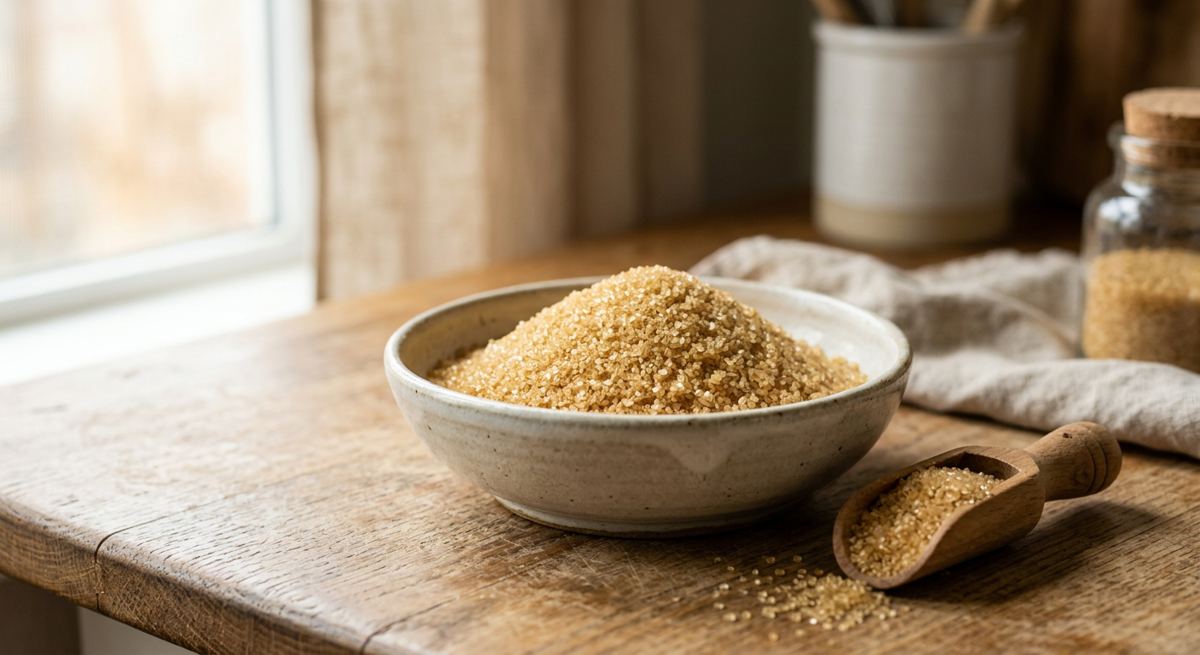
Is refined sugar vegan?
Sometimes vegan
Is refined sugar vegan?
Why
refined sugar is vegan in most countries, but in some markets the production process or recipe uses animal products, so it varies by region.
Sugar is sometimes vegan. The key issue is that some refined white sugar is processed using bone char (animal bones) as a decolourising filter, particularly in the United States. UK and European beet sugar, most organic sugar, and all liquid sugars are typically vegan-friendly because they do not use bone char in production. Precision-fermented or animal-free versions of cane sugar are not commercially relevant, as the issue is processing, not the sugar itself.
Where it comes from
- Sugar comes from either sugar cane (tropical grass) or sugar beet (root crop). Both are plants, so the raw material is vegan.
- For cane sugar refining, some producers use bone char (from cattle bones) to remove colour and impurities, making it non-vegan. Beet sugar is always refined without bone char.
- Bone char is not an ingredient but a processing aid; it does not remain in the final product, but its use conflicts with vegan ethics.
- Alternative refining methods include activated carbon, ion-exchange resins, and steam-activated carbon, which are vegan-friendly.
- Approximately half of US cane sugar may be filtered with bone char, but exact figures vary by brand and region. Organic sugar in the US and most sugar in the EU/UK avoids bone char.
Names to look for on the label
- Sugar
- Cane sugar
- Beet sugar
- Organic sugar
- Raw sugar
- Turbinado sugar
- Unrefined cane sugar
- Brown sugar
To identify vegan-friendly sugar, check the label for 'beet sugar' or 'organic sugar' which are reliably vegan in the US. In the UK and Europe, most standard white sugar is from beet, so it is safe. For cane sugar, look for 'Unrefined' or 'Raw' varieties like turbinado or muscovado, which skip the bone-char filter. Contact the brand directly if unsure; many large manufacturers now specify whether their sugar is bone-char-free on their websites. Remember that 'natural' or 'pure' on a label does not guarantee vegan processing. Liquid sugars, such as golden syrup or agave, are always vegan. When dining out or buying processed foods, assume the sugar may be non-vegan unless certified organic or from a trusted source.
Commonly hides in
- dark chocolate
- dairy ice cream
What to use instead
maple syrup — It does exactly the same job in coffee, cooking and baking, with no change in method.
How to check a label
Ingredient lists are legally required to name allergens such as milk and egg in bold, which catches most hidden animal ingredients. E-numbers and processing aids are the gap: E120, E441, E542, E904 and E920 are animal-derived, and processing aids often go unlisted. When in doubt, look for a certified vegan mark or ask the manufacturer directly — most reply within a few days.
Common questions about refined sugar
Is brown sugar vegan?
Brown sugar is often just white sugar with molasses added back. If the white sugar was filtered with bone char, the brown sugar is not vegan. Look for organic or beet-sugar-based brown sugars to be safe.
Is powdered sugar vegan?
Powdered sugar (confectioners' sugar) is usually made from finely ground white sugar. If the base sugar used bone char, it is not vegan. Organic powdered sugar is reliably vegan. Some brands also use cornstarch as an anti-caking agent, which is fine.
Why is some sugar not vegan if it is from plants?
Although sugar starts from plants, the refining process for some cane sugar uses bone char (animal bones) as a filter. While the final sugar contains no bone char, many vegans avoid it because animals were used in its production.
Does sugar need a vegan label to be safe?
No, but a vegan label guarantees it. In the EU/UK, non-organic white sugar is mostly beet and thus vegan. In the US, you often need to buy organic or contact the brand. Liquid sugars and unrefined raw sugars are also safe bets.
Is sugar in restaurants and packaged foods vegan?
Not necessarily. Many pre-packaged foods in the US use non-vegan sugar. In restaurants, it is hard to know unless they specify organic. For strict vegans, checking with companies directly or choosing certified vegan products is safest.
Sources: Poore & Nemecek (Science, 2018), FAO, USDA FoodData Central, Mekonnen & Hoekstra (2011).
Newsletter
One short letter. Once a month.
A handful of recipes, a story worth your time, and one thing you can do this week. Nothing else.
We never share your email. Unsubscribe in one click.