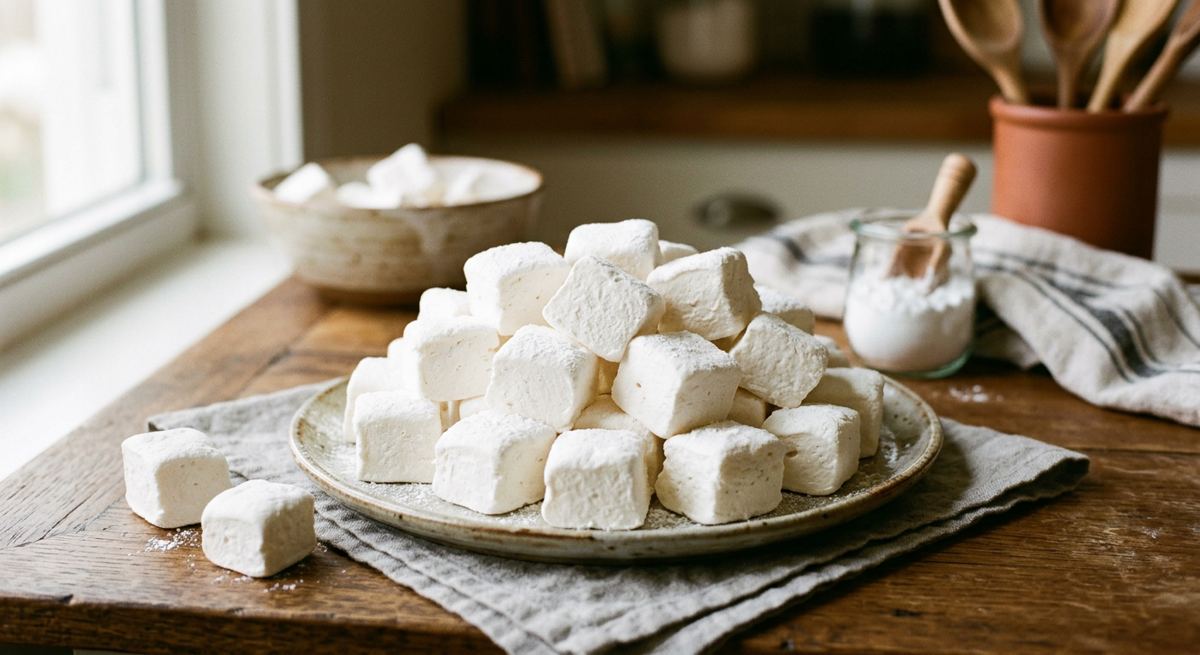
Is marshmallows vegan?
Not vegan
Is marshmallows vegan?
Why
marshmallows is made by boiling the skin, bones and connective tissue of pigs and cattle — a slaughterhouse by-product.
Marshmallows are typically not vegan because they contain gelatin, a protein derived from animal bones, skin, and connective tissues. While plant-based versions exist, the standard commercial product relies on this non-vegan ingredient for its fluffy texture.
Where it comes from
- Marshmallows are traditionally made by whipping a mixture of sugar, corn syrup, and gelatin, which is sourced from animal by-products like pork or beef skin and bones.
- Plant-based alternatives use agar-agar (from seaweed), carrageenan (from red algae), or starches (e.g., tapioca, potato) as gelling agents to mimic the texture.
- Gelatin is produced by boiling animal parts in water to extract collagen, which is then dried and ground into a powder.
- The confectionery industry often uses gelatin for its stable foam structure, but rising demand for vegan options has led to increased production of gelatin-free marshmallows.
- Notable facts: marshmallows originated from the mallow plant's root sap, but modern versions replaced this with gelatin in the 19th century.
Names to look for on the label
- gelatin
- E441
- food gelatine
- animal gum
- gelatine (bovine/pork)
- non-vegetarian gelling agent
In the supermarket, always check the ingredients list for 'gelatin,' 'gelatine,' or 'E441' on the packaging. Avoid marshmallows that mention 'gelatin' without qualification, as this indicates animal origin. Look for labels like 'vegan,' 'plant-based,' or 'gelatin-free' to identify safe options. Be wary of generic descriptions like 'gelling agent'—these may still be animal-derived. Some brands use 'agar' or 'carrageenan' explicitly, which are vegan. Confectionery aisles also offer marshmallow fluff; read labels carefully. When in doubt, contact the manufacturer or consult vegan certification logos from The Vegan Society or similar.
What to use instead
aquafaba — It does exactly the same job in coffee, cooking and baking, with no change in method.
How to check a label
Ingredient lists are legally required to name allergens such as milk and egg in bold, which catches most hidden animal ingredients. E-numbers and processing aids are the gap: E120, E441, E542, E904 and E920 are animal-derived, and processing aids often go unlisted. When in doubt, look for a certified vegan mark or ask the manufacturer directly — most reply within a few days.
Common questions about marshmallows
Are all marshmallows non-vegan?
Not all; many brands offer vegan marshmallows using agar-agar or starches. However, standard marshmallows almost always contain gelatin, making them unsuitable for vegans.
Can marshmallows be made without gelatin?
Yes, plant-based gelling agents like agar-agar, carrageenan, or starches can replace gelatin. These are common in vegan marshmallow recipes and products.
Is E441 always animal-derived?
Yes, E441 is the food additive code for gelatin, which is sourced from animals. It is not plant-based or synthetic.
Do vegan marshmallows taste the same?
Vegan marshmallows can taste very similar, though some note a slightly different texture. Many consumers report minimal difference, especially in baked or melted uses.
Are kosher or halal marshmallows vegan?
Not necessarily; kosher or halal marshmallows may use gelatin from permissible animal sources, but it remains animal-derived. Look for explicit vegan labels.
Sources: Poore & Nemecek (Science, 2018), FAO, USDA FoodData Central, Mekonnen & Hoekstra (2011).
Newsletter
One short letter. Once a month.
A handful of recipes, a story worth your time, and one thing you can do this week. Nothing else.
We never share your email. Unsubscribe in one click.