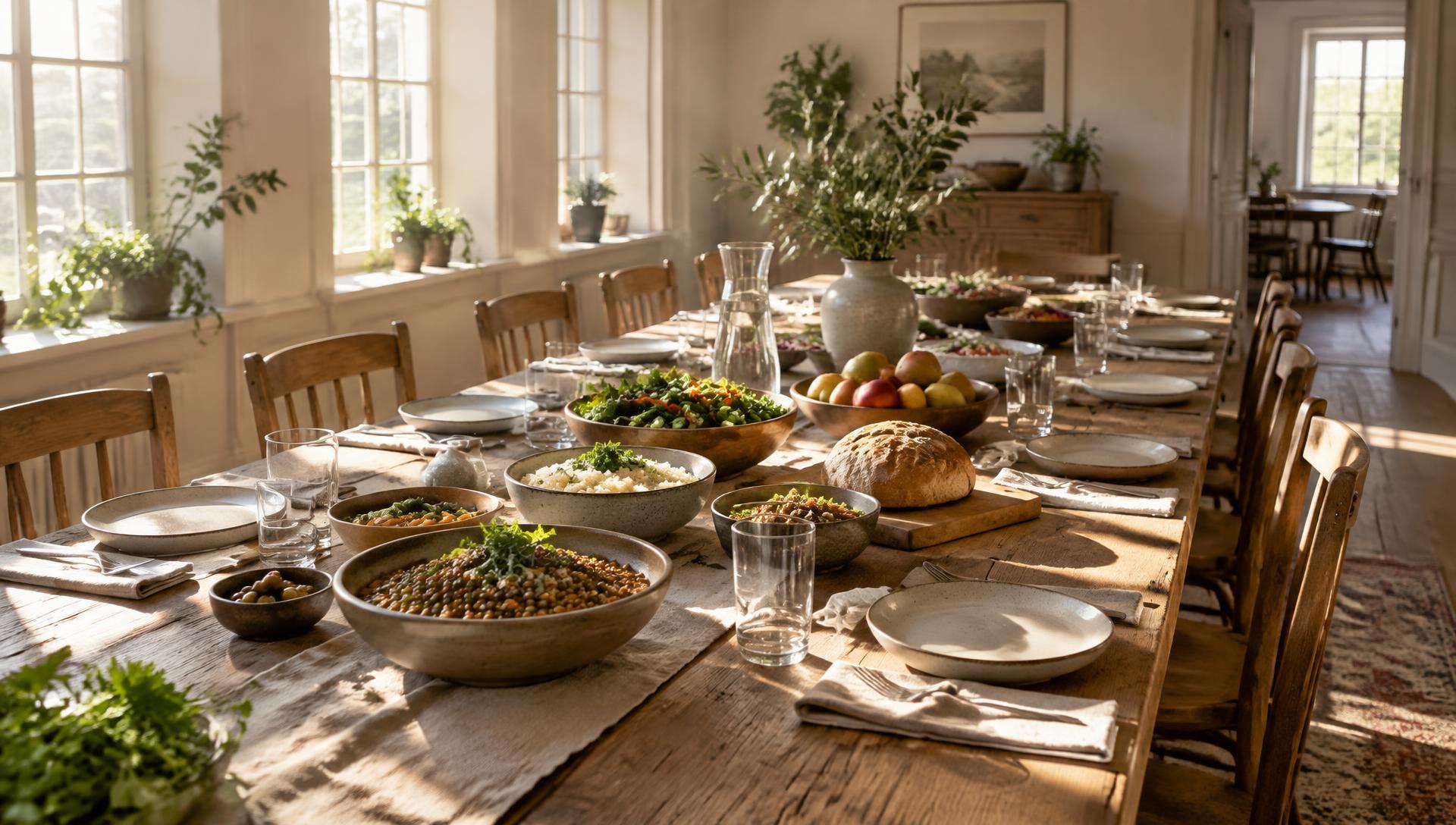
Pagan & Earth-Based Traditions
Overview
Pagan & Earth-Based Traditions — and the animals
Pagan and Earth-based traditions are rooted in a deep reverence for Nature in all Her many forms. For many practitioners, this spiritual connection naturally leads to a plant-based lifestyle, as they seek to live in alignment with the cycles of the earth and the diverse beings that inhabit it. Whether following Wiccan, Druidic, Kemetic, or Shamanistic paths, the common thread is a recognition of the sacredness of life and the interconnectedness of the 'web of nature.'
The transition to veganism is often seen as an act of spiritual maturity—moving from being a passive observer of nature to an active protector. By choosing plant-based living, Pagans honor the 'Witan' or wisdom of their ancestors, seeking insight into how their daily choices affect the greater whole. This guide serves as a resource for those wishing to craft their own path toward harmlessness, acknowledging that each individual holds their own spiritual authority.
From the ancient Greek philosophers who believed in the reincarnation of souls across species to modern feminist Dianic traditions that view animal exploitation as a product of patriarchal systems, the history of Paganism is rich with advocacy for animals. Embracing veganism is not just a dietary choice but a magical and ethical commitment to removing obstacles to liberation and fostering a world where all beings can thrive in peace.
Principles
Teachings that point towards the plate
The Wiccan Rede
The core ethical tenet 'If it harms none, do what you will' serves as a primary foundation for veganism. It encourages practitioners to consider the impact of their consumption on sentient beings who feel pain and loss.
Universal Oneness
Many traditions, including Druidry and Wicca, hold the theological concept of Oneness. This recognizes that the divine energy, such as Awen, inspires all life, making the abuse of non-human animals a violation of the sacred web.
Maat (Justice and Balance)
In Kemetic traditions, Maat represents the principle of justice and balance. Using the scales of Maat to measure our justice toward all life forms provides an ethical foundation for Kemetic veganism.
Ahimsa and Harmlessness
The ideal of harmlessness is a guiding light for many earth-based paths. It involves practicing universal lovingkindness and seeking to minimize the suffering caused by our presence on the planet.
Feminist Ethics
Dianic traditions often link the exploitation of animals and the earth to patriarchal structures. Choosing a plant-based diet is seen as a way to reclaim bodily health and reject systems of cruelty.
Wisdom and Insight
The word Wicca is derived from 'Witan,' meaning wisdom. Being a 'wise person' involves seeking information about the world and making informed, compassionate choices regarding food and resources.
““The word Wicca comes from the word and concept Witan- or wisdom, wise folk. To me that means folks who value information, people who value being informed and seeking to gain insight about the world around them.””
““If it Harms None… Do what you will...””
““The Pagan learns how to deepen his relationships, exploring the connectedness of consciousness within the web of nature; the option to be complicit in the abuse of nonhuman animals disappears.””
““Meat is so strongly identified with the worst animal attributes of men, it’s always a wonder to me that feminists still eat meat.””
““We realize that meat is not essential to our well-being; rather it can be very detrimental to health….””
In practice
Historical Roots of Plant-Based Paganism
The history of plant-based diets within Pagan traditions can be traced back to Classical Ancient Greece. Philosophers like Pythagoras, who was a practitioner of ancient Greek religion, abstained from animal products for ethical and religious reasons, often motivated by a belief in reincarnation across species.
Other notable figures such as Plutarch, Plato, and Ovid also shared these sentiments. In more recent history, the founders of the Fellowship of Isis, Olivia and Lawrence Robertson, were documented as being very veg-friendly, maintaining a vegetarian environment for their community and recognizing the spiritual status of non-human animals.
In practice
Wicca and the Ethic of Harmlessness
Wicca is perhaps the tradition most frequently equated with the ethic of harmlessness. The 'Rede,' which means advice, serves as a creed for many who believe that all life relies upon the web of life. This interconnection is celebrated through the wheel of the year.
For Wiccans, magic is often used as a form of activism. Integrating veganism into one's path is a way to align personal fulfillment with the magical goal of protecting the Earth and its inhabitants.
In practice
Kemeticism and the Bounty of the Nile
Kemeticism, or Egyptian Neo-paganism, evokes the image of the 'black land'—a place of fertility and bounty. The tradition teaches that the deities Isis and Osiris brought vegetable crops to humankind and taught them how to eat them, moving humanity away from violence.
The 'Kemetic Diet' emphasizes that plants should be a daily staple for optimal health and spiritual development. In this view, animal products are a rare addition rather than a necessity, reflecting a lifestyle of balance and purity.
- Maat as a measure of justice for all life
- Isis and Osiris as bringers of agriculture
- The spiritual importance of a clean, plant-based diet
In practice
Druidry and the Flow of Awen
Celtic Druidism is an earth-centric belief system that holds a deep ecological and theological concept of Oneness. The divine energy that creates and inspires all life is known as Awen.
This commitment to Oneness has naturally birthed a Neo-Druid strain of thought that is strictly vegan. By recognizing that the same energy flows through humans and non-humans alike, Druids find that harming animals is a disruption of the natural flow of Awen.
In practice
Ritualizing Animal Liberation
Creating rituals for animal rights can be a powerful way to process grief and set intentions for a better world. These rituals often involve creating altars with tokens of animal exploitation, such as ear tags, alongside images of beloved animal companions.
Magical work can also focus on removing obstacles to animal liberation. This might include tying knots in a cord to represent systemic barriers and then cutting them, or using visualization to journey to a world where factory farms have been replaced by industries that offer abundance and healthful food.
- Forgiveness ceremonies for past participation in exploitation
- Visualization of a world without factory farms
- Using tokens like collars or bowls to honor animal familiars
- Charging rocks with energy to remove burdens from the earth
In practice
Feminist Perspectives and the Dianic Path
In the Dianic tradition, which focuses on the Goddess and feminist spirituality, the choice to follow a plant-based diet is often viewed through the lens of social justice and bodily autonomy. Zsuzsanna Budapest, in 'The Holy Book of Women’s Mysteries,' highlights the connection between the patriarchal structures of industrial farming and the exploitation of both animals and human workers. By choosing plant-based foods, practitioners seek to distance themselves from systems of cruelty that they believe are detrimental to both spiritual and physical well-being.
This path emphasizes that meat is not essential for health and that moving away from processed animal products is a way for individuals to reclaim their vitality. It aligns the personal health of the practitioner with the broader goal of ending oppression, suggesting that a compassionate diet is a natural extension of a feminist spiritual practice.
In practice
The Fellowship of Isis and Animal Membership
The Fellowship of Isis (FOI), founded by Olivia and Lawrence Robertson, provides a unique model for interspecies spiritual community. The FOI has historically embraced vegetarianism, with Lawrence Robertson being a documented vegetarian and the organization serving vegetarian meals at their gatherings. This tradition views animals not just as symbols, but as spiritual beings capable of participating in the community.
A distinctive practice within this tradition is the formal registration of companion animals as members of the Fellowship. By recognizing 'Animal Families,' the FOI acknowledges the intrinsic value of non-human life and provides specific blessings and rituals intended to honor the sacred bond between humans and their animal familiars.
In practice
Ancient Wisdom and the Kemetic Diet
Kemeticism, or Egyptian Neo-paganism, draws on the concept of Maat—the principle of justice, balance, and cosmic order. Applying Maat to one's diet involves measuring the justice of our actions toward all living things. The tradition teaches that Isis and Osiris originally brought vegetable crops to humanity, encouraging a transition away from violence and toward the bounty of the earth.
Modern practitioners often look to the 'Kemetic Diet,' which emphasizes that plants should be the daily staple for maintaining a clean and optimal body for spiritual development. In this framework, animal products are seen as a rare addition or entirely unnecessary, as the goal is to maintain a state of purity and harmony with the fertile 'black land' represented by Kemet.
- Maat as a guide for ethical consumption and balance.
- The role of Isis and Osiris as providers of plant-based sustenance.
- The spiritual importance of a 'clean' diet for energetic clarity.
In practice
Navigating Community Objections with Grace
Within Pagan circles, objections to veganism sometimes arise from a desire to honor ancient traditions that included animal sacrifice or hunting. A thoughtful reply within the community involves acknowledging that spiritual authority rests with the individual, while pointing out that modern industrial systems are vastly different from the ancestral contexts of the past. As Maple, a Pagan Priestess, notes, being 'wise folk' (Witan) means seeking new insights and being informed about the world as it exists today.
When discussing these topics, it is helpful to focus on the 'Wiccan Rede' as a living piece of advice rather than a rigid commandment. By framing plant-based living as a way to 'Harm None' in a modern global economy, practitioners can invite others to explore how their rituals can evolve to reflect contemporary understandings of ecology and animal sentience.
In practice
Environmental Stewardship and the Web of Life
Pagan ethics are deeply rooted in the interconnectedness of all life, often described as the 'Web of Nature.' Emma Restall Orr, in 'Living With Honour,' argues that as one deepens their relationship with the consciousness of the natural world, the option to be complicit in the abuse of animals naturally disappears. This perspective links veganism directly to environmentalism, as the protection of animal lives is inseparable from the protection of their habitats.
The commitment to 'Oneness' found in Druidry and other earth-centric paths necessitates a look at how animal agriculture impacts the planet. Choosing a plant-based path is seen as a way to reduce one's ecological footprint, honoring the Awen (divine inspiration) that flows through all living things and ensuring that the Earth remains a vibrant, diverse home for future generations.
Food
Plant-based food in this tradition
- Corn and grain are celebrated as symbols of rebirth in seasonal chants.
- Vegetable crops are honored as gifts from Isis and Osiris in Kemetic tradition.
- Plant-based staples are recommended for spiritual purity in Ancient African wisdom.
- Vegan potlucks are encouraged for Winter Solstice and other Sabbat gatherings.
- Plant-based diets are historically linked to the 'bounty and fertility' of the Nile.
- Ancient Greek traditions often included abstinence from animal products for religious reasons.
- Traditional 'Corn and Grain' offerings for Sabbat feasts.
- Plant-based 'Cakes and Ale' using oatcakes and local cider or juice.
- Seasonal root vegetable stews to celebrate the grounding energy of the Earth.
- Fruit-based offerings to honor Isis and Osiris during Kemetic celebrations.
- Nut and seed loaves as a hearty, cruelty-free centerpiece for Winter Solstice gatherings.
Action
What a community can do
- 1Encourage discussion about how the Wiccan Rede applies to a plant-based life.
- 2Ask coven mates and organizers to support plant-based gatherings.
- 3Include non-human animal spirits when invoking allies in ritual.
- 4Organize social outings to farm sanctuaries or vegan restaurants.
- 5Host a 'Blessing of the Animals' or 'Animal Allies' ritual.
- 6Volunteer for animal advocacy or participate in leafleting.
- 7Remind ritual participants in advance to bring only vegan food to potlucks.
- 8Create an altar with tokens that remind you of the reality of animal exploitation.
- 9Perform a forgiveness ceremony for past participation in animal exploitation.
- 10Use cord magic to symbolize the breaking of chains of oppression.
- 11Practice trance work to visualize a world where factory farms no longer exist.
- 12Register companion animals as members of spiritual groups like the Fellowship of Isis.
- 13Search social media for #veganpagan to connect with like-minded practitioners.
- 14Form a vegan-specific coven if existing groups are not ready to transition.
- 15Create a 'forgiveness ceremony' to release past participation in animal exploitation.
- 16Use tokens of animal liberation, such as images of sanctuaries, on your altar instead of traditional animal products.
- 17Perform a 'cord-cutting' ritual to symbolically remove obstacles to animal liberation in the world.
- 18Register companion animals in spiritual groups to acknowledge their place in the community.
- 19Organize coven outings to farm sanctuaries to connect with animals in a setting of peace.
Resources
Read, watch, connect
Books
- Living With Honour: A Pagan Ethics — Emma Restall Orr
- The Holy Book of Women’s Mysteries — Zsuzsanna Budapest
- Kemetic Diet: Ancient African Wisdom for Health of Mind, Body, & Spirit — Muata Ashby
Films & talks
- Cowspiracy — Documentary exploring the environmental impact of animal agriculture.
- What the Health — Film examining the link between diet and disease.
- Earthlings — Intense footage of animal exploitation; requires compassionate viewing care.
- A Life Connected — A short, 11-minute feel-good video about the benefits of veganism.
- The Metaphysics of Food — A talk by Dr. Will Tuttle.
- Peaceable Kingdom — Documentary about farmers who experienced a change of heart.
- The Witness — The story of a man's awakening to animal rights.
- A Prayer for Compassion — Documentary by Thomas Jackson focusing on the interfaith call to compassion.
Questions