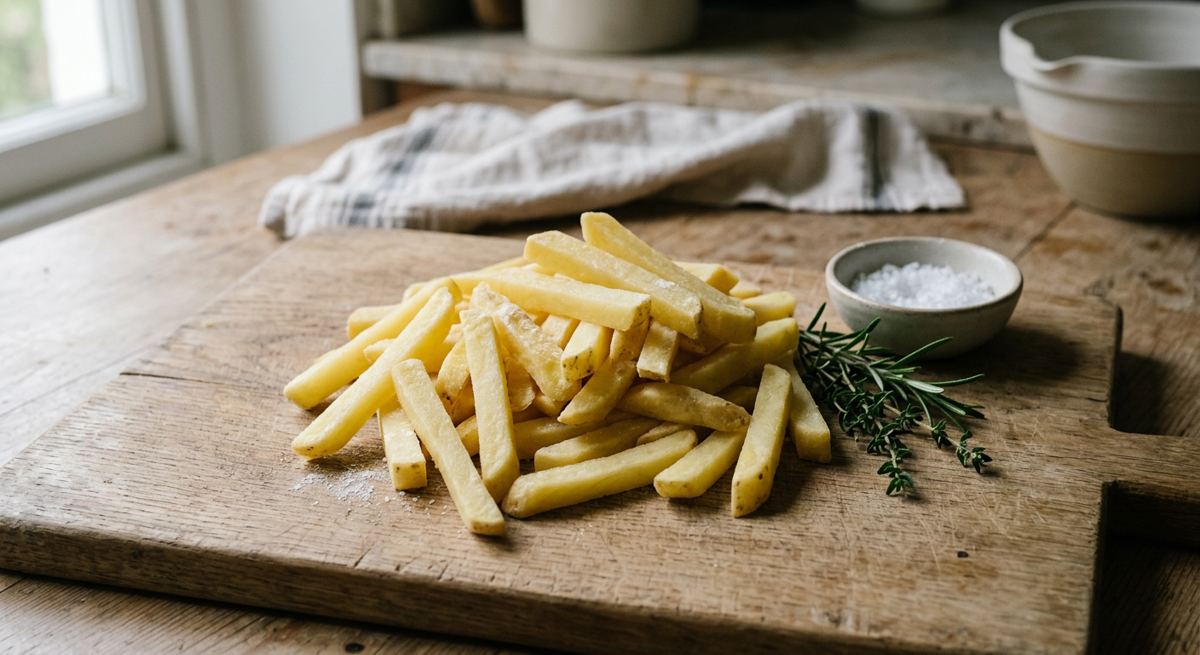
Is French fries vegan?
Sometimes vegan
Is French fries vegan?
Why
French fries contains no animal ingredients in the final product, but animal-derived processing aids are often used during production, so it depends on the producer.
French fries are sometimes vegan, as they are typically made from potatoes, oil, and salt — all plant-based ingredients. However, they can be non-vegan if cooked in animal fat or flavoured with animal-derived additives. The main concern is 'processing aids' such as tallow used in frying, which may not be declared on labels.
Where it comes from
- French fries are made by cutting potatoes into strips, washing, drying, and frying in oil.
- Common frying oils include vegetable oils (e.g., sunflower, rapeseed) which are plant-based and vegan.
- Some fast-food chains fry french fries in beef tallow or other animal fats for flavour, especially in the USA.
- Cross-contamination can occur in shared fryers used for non-vegan items like chicken or fish.
- Frozen french fries may be pre-fried or coated with ingredients like dextrose (to prevent browning), but these are often plant-derived and vegan.
Names to look for on the label
- French fries
- Chips (UK)
- Frozen potatoes
- Potato products
- Dextrose
- Tallow
- Animal fat
- No animal-derived ingredients
To ensure french fries are vegan, check the ingredients list for animal fats like tallow, lard, or butter. In restaurants, ask whether they are cooked in shared fryers with meat or fish, as this can transfer animal residues. Frozen varieties often have a 'suitable for vegans' label; otherwise, look for 'vegetable oil' as the frying medium. Be cautious with seasoning blends, as some may contain milk powder or cheese. For homemade fries, use plant-based oils and avoid any animal-derived additives. Vegan animal-free options produced via precision fermentation are available, but these remain rare. In fast-food chains, review their allergen or vegan menus online, as recipes vary by country. Cross-contamination is common, but ethical vegans may consider it acceptable where no direct animal ingredients are involved.
What to use instead
olive oil — It does exactly the same job in coffee, cooking and baking, with no change in method.
How to check a label
Ingredient lists are legally required to name allergens such as milk and egg in bold, which catches most hidden animal ingredients. E-numbers and processing aids are the gap: E120, E441, E542, E904 and E920 are animal-derived, and processing aids often go unlisted. When in doubt, look for a certified vegan mark or ask the manufacturer directly — most reply within a few days.
Common questions about french fries
Are McDonald's french fries vegan?
No, in the USA McDonald's fries contain 'natural beef flavour' (derived from milk) and are cooked in beef tallow. In the UK, they are cooked in vegetable oil but may contain milk derivatives, so not vegan.
Can french fries be non-vegan due to processing aids?
Yes, some manufacturers use animal-derived processing aids like tallow for frying or dextrose from bone char to prevent browning. These may not be listed on labels, but opting for labelled vegan products avoids this.
What is the difference between french fries and chips in terms of veganism?
In the UK, chips are thicker-cut and often made from fresh potatoes, typically fried in vegetable oil, making them vegan. French fries are thinner and sometimes pre-fried with animal fats, requiring more checks.
Are frozen french fries vegan?
Many frozen brands are vegan, but always check for milk powder, whey, or animal fat. Brands like McCain or own-label supermarket brands often have vegan options if cooked in vegetable oil only.
Does cross-contamination in fryers make fries non-vegan?
There is no consensus. Some vegans avoid it due to animal residue, while others accept it if no direct animal ingredients are used. It depends on personal ethical boundaries.
Sources: Poore & Nemecek (Science, 2018), FAO, USDA FoodData Central, Mekonnen & Hoekstra (2011).
Newsletter
One short letter. Once a month.
A handful of recipes, a story worth your time, and one thing you can do this week. Nothing else.
We never share your email. Unsubscribe in one click.